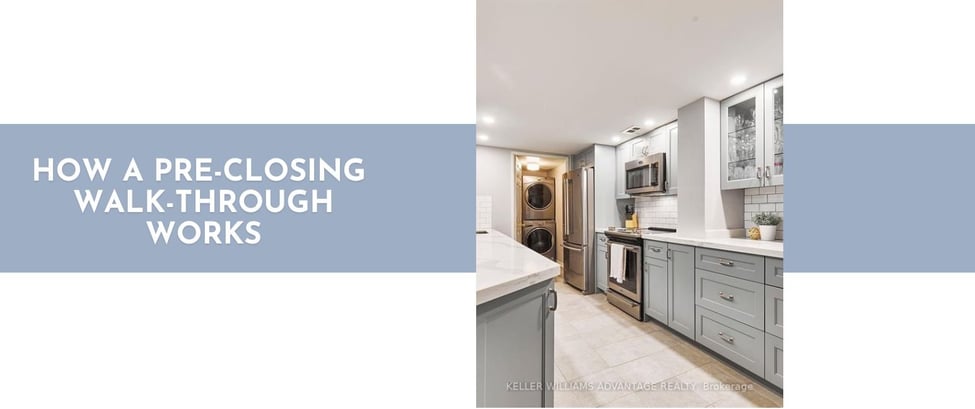
Conducting a Pre-Closing Visit

Buying a home is an exciting yet complex process that involves multiple steps before the final closing. One essential step is the pre-closing visit, also known as a final walkthrough. This visit ensures that the home is in the agreed-upon condition and that no unexpected issues have arisen since the initial purchase agreement.

Why am I writing about this?  Well, I have taken several courses on Real Estate law (I just finished one) and many many Realtors I run into don't understand some fundamentals on Real Estate contracts - so they don't/can't explain them to clients.  Realistically buying a property can feel like a fire hose of information.  So this article covers in detail the importance of pre-closing visits.

Your legal right in Ontario

A pre-closing visit can help buyers avoid last-minute surprises and give them peace of mind before taking possession. Additionally, even if not explicitly stated in the contract, Ontario case law—specifically Harkness v. Cooney —affirms that buyers have a right to a final walkthrough. In this post, we’ll explore the legal framework behind pre-closing visits, what buyers should check, and common "what if" scenarios that could arise.

See below for a more detailed description of Harkness vs. Cooney.

Have you heard about Equitable Conversion?

One of the fundamental legal principles related to real estate transactions is called equitable conversion.  In essence, once a buyer and seller sign a binding contract for the sale of a home, the buyer becomes the equitable owner, while the seller retains legal title until the closing is finalized.

Why is this important?

In the simplest terms, the seller holds the property in trust until closing.  As such, it’s their responsibility to keep the property in the same condition as it was when the contract was signed, unless the contract reads otherwise.  

A pre-closing visit gives the buyer the opportunity to inspect the property and ensure it remains in the agreed-upon condition. If significant issues arise, buyers may have legal grounds to delay closing or request repairs or compensation.

When should you do you do the final walkthrough?

I like to do it 2-3 days before closing.  That way any problems can be dealt with without the pressure of handling in on the closing day. 

What Buyers Should Check During a Pre-Closing Visit

A pre-closing visit is the buyer’s final opportunity to confirm that the home is in the expected condition before closing. Here’s a checklist of key areas to inspect:

General Condition of the Property

- Ensure the home is in the same condition as when you made the offer.

- Check for any new damage (e.g., walls, ceilings, flooring).

- Look for signs of leaks, mold, or pest infestations.

Check for Repairs and Agreed-Upon Fixes

- Verify that any repairs negotiated in the purchase agreement have been completed.

- Review receipts or warranties for any repair work done by the seller if you have requested them in the offer.

Appliances and Fixtures

- Test all included appliances (stove, refrigerator, dishwasher, washer, dryer, etc.).

- Ensure all light fixtures, ceiling fans, and electrical outlets are functional.

- Confirm that any agreed-upon appliances and fixtures are still present; and they are the same ones you saw when you signed the contract.

- if there is not enough time to run the dishwasher and washer, check them immediately when you get the keys, before the end of the day of closing.

Plumbing and Water Systems

- Turn on all faucets and check for water pressure and leaks.

- Flush toilets and run showers to ensure proper drainage.

- Inspect the hot water heater for functionality.

HVAC

- Test the HVAC system to ensure heating and cooling are working properly

Doors and Windows

- Open and close all doors and windows to ensure they function properly.

- Look for broken locks, cracked windows,  damaged or missing screens.

Exterior and Landscaping

- Inspect the roof, gutters, and siding for visible damage.

- Ensure that agreed-upon landscaping or outdoor structures remain intact & items have been removed from any outbuildings

Garage and Storage Areas

- Verify garage door functionality

- Ensure storage areas and sheds are empty and in good condition.

Check for Items the Seller Should Have Removed

- Ensure all personal items and debris have been removed.

What If Scenarios: Addressing Common Pre-Closing Issues

1.    What if the seller hasn’t moved out yet (or have, but have left a lot of stuff behind)?

If the seller or other party like a tenant is still occupying the home, and your contract includes vacant possession, contact your lawyer right away.  Options can include a short contract extension, however However, if they refuse to vacate the contract may be breached. 

If the home is not in ‘broom swept condition’, document it with photos and notify your real estate agent and lawyer.  A reasonable solution would be a holdback on closing funds for you to dispose of the items and clean the property if the seller is unwilling or unable to do so. 

2.    What if there’s new damage to the property?

If you discover damage that wasn’t present during previous visits, document it with photos and notify your real estate agent and lawyer.  Depending on the severity, you may request repairs, a price reduction, or a holdback on closing funds.

3.    What if agreed-upon repairs weren’t completed?

If the seller failed to make promised repairs, options would be negotiate for compensation to complete the repairs yourself, delay closing until the work is done. In some cases, funds can be held in trust until repairs are completed.

4.    What if the appliances or fixtures are missing?

If appliances or fixtures included in the purchase agreement are missing, or are different than the ones you saw when you went under contract, notify your lawyer & Realtor immediately.  Remedies may include compensation or require the seller to replace the missing items before closing.

5.    What if I have used up all my purchaser visits long before closing?

In Ontario, the right to a pre-closing visit is not always explicitly included in real estate contracts, leading to potential disputes. However, the Ontario case Harkness v. Cooney established that a final walkthrough is a reasonable expectation for buyers, even if it is not contractually stipulated.

In this case, the court ruled in favor of the buyer’s right to inspect the property before closing to ensure it was in the agreed-upon condition. This decision underscores the importance of a pre-closing visit and reinforces the buyer’s ability to verify the property’s status before transferring funds and assuming ownership.

Final Thoughts

A pre-closing visit is a critical step that helps ensure a smooth transition to homeownership. By understanding the legal principles behind equitable conversion and the case law supporting final walkthroughs, buyers can confidently protect their interests. Taking the time to inspect key areas of the home and addressing any issues before closing can save time, money, and stress in the long run.

If you’re purchasing a home, make sure to schedule a pre-closing visit and work with your real estate agent and lawyer to resolve any concerns. By being proactive, you’ll ensure that your dream home is truly ready for move-in day.

Other helpful links:

About Me

Video Walkthrough of a pre-closing visit in a condo

Feb 03, 2025

Recent Blog Posts

Nov 10, 2026

Selling a Loved One's Home as an Executor or Power of Attorney: Where Do You Even Begin?

I know when this happened to me it was overwhelming - even as an experienced realtor, knowing where to start and where my responsibilities lay were confusing & on top of that it's a very emotional process!  Family dynamics can complicate the matter - although mine was smooth sailing; often family members don't get along, have differing opinions on a property value, different styles of moving through the process, different needs for inheritance funds - so navigating is exhausting! 

Whether you have been appointed Power of Attorney for an aging parent or are serving as the executor of an estate in Ontario, taking on the sale of a family home can feel overwhelming. Balancing family dynamics, legal requirements, and decades of accumulated belongings is no small task. Here is what you actually need to evaluate to navigate the process smoothly and protect the value of the home.

Author's note: this article is not meant to be legal advice, but written from a real-estate perspective.

1. Confirm your legal authority first

Before signing documents, hiring contractors, or listing the property, double-check that you have the proper legal paperwork in hand. For a Power of Attorney, ensure the document is active and grants real estate authority. A POA is only valid if the person is still living.

For an estate, you will most often need a probated will (or proof of probate application) before the property can officially close. Getting your lawyer involved early saves costly delays down the road. And there's a lesser-known "first dealings" caveat that could save your family thousands—you can call me and I'll walk you through it.

For example, a colleague of mine is working with a seller with this scenario:  The house is her Mother's home; the mother has passed away.  The mother named both herself and her sister as Estate trustees.  But it was worded unclearly.  The sister has also passed away -- without a will.    So does the remaining daugher have autority to sell the home?  That is something only a lawyer and/or the court can decide. 


2. Tackle the contents before the real estate

Moving or settling an estate home usually means dealing with 30 to 50 years of accumulated possessions. Avoid trying to do it all yourself in a single weekend. Start by identifying sentimental items for family members, then bring in professional estate auctioneers, donation services, or clean-out teams for the rest. Clearing the clutter first gives you a clear picture of what repairs or staging might actually be needed.

3. Decide between 'necessary repairs', 'updating', and 'renovating'

It can be tempting to fully update an older home to max out the price, but over-renovating an estate property may not get you a 1:1 return. Here's where a local realtor can advise you on market conditions and where to get the best ROI. Many families simply don't have the money for a major reno, so make sure to get professional advice at the outset.  If family members are collaborating,  there may be a difference of opinion - so that's also a good reason to bring in a local realtor for advice at the beginning. 

4. Vacant Toronto homes face unique risks

Check with the home insurance provider. Many insurers require a vacant home permit or mandate regular walkthroughs (often every 48 to 72 hours) to keep the policy valid. Ensure lawn care in the summer and snow removal in the winter are set up so the property stays safe, looks lived-in, and avoids municipal fines.

But what about the City of Toronto Vacant home tax?  Did you know that as long as the property is in the probate process or being sold you can avoid Toronto's Vacant Home Tax?  You need the property tax information to file your declaration on-line.


5. Price for the current market

Estate and POA sales carry a fiduciary duty to act in the best financial interest of the estate and beneficiaries. Often family may disagree on price. Asking for an objective, data-backed comparative market analysis helps set a fair market price that generates strong buyer interest without leaving money on the table.  

You'll need to do this up front, as there will be probate tax on the estate's total holdings (1.5% at time of writing in Ontario).  Real Estate may be the largest estate holding for the estate, and the estate tax implications may help you decide whether or not to renovate. 

This can be tricky if the family has differing opinions on value.  Or if you're dealing with a real estate agent that's not local.  In that case there are a few options to choose from:

  • pay for a formal appraisal
  • get 3 letters of opinion from different realtors and choose the average

Just understand if the price you get from the house is more than you've stated in your probate application or if the market improves between applying for probate & paying the probate fees you'll need to save money from the estate to pay the additional probate fees. 

6. Can I sell my deceased parent's house if there is no will in Ontario?

This happens more often than you may think. In this case, the closest next of kin must formally apply to the court for a Certificate of Appointment of Estate Trustee Without a Will. No bank, financial institution, or land registry office will let anyone sign documents, access accounts, or transfer real estate title until the court issues this certificate.  This is what happened to my colleage in the first question.

Here are 5 frequently searched questions and answers that address the most common roadblocks families face during executor and POA real estate sales:

FAQ's for selling a property under POA or as an Estate in Ontario

1. Q: Do we have to wait until probate is fully approved before putting a family home on the market?

A: You can list, market, and even accept a conditional offer on an estate property while the probate application is pending. However, the sale cannot legally close until the court issues the Certificate of Appointment. Building this timeline into your closing date avoids wasting valuable time.  Often there's a special clause we realtors insert into the offer to allow for a flexible closing date based on probate. 

There is one exception to this, and that's if the property falls under "First Dealings" - call me at 416-562-5002 and I can explain more about first dealings.  This saved a client $15,000 in probate tax this year! 


2.  Q: What is the difference between a Power of Attorney (POA) and an Executor when selling a home?

A:  A Power of Attorney for property only holds authority while the owner is alive, and that authority ends the absolute moment they pass away. An executor (or estate trustee) only gains authority after death. They never overlap, so verifying which document is active is always step one.


3. Q: Will doing a major modern update on an older family home guarantee a higher selling price?

A: Not necessarily. Over-renovating an estate property often fails to deliver a 1:1 financial return. Most estate homes benefit far more from a thorough clean-out, fresh paint, and targeted repairs that fix safety defects rather than costly, full-scale modernizations.  However in a soft market where prices are falling, updated homes sell faster than fixer-uppers.


4. Q: Are we covered if the family home is sitting empty while we sort through belongings and wait for a sale?

A: Standard home insurance policies typically become void or restrict coverage after 30 days of vacancy. You must notify your insurance provider immediately, as many policies require a vacant home permit or mandate physical walkthroughs every 48 to 72 hours to keep the policy active.   In some cases a family member may move in short term to ensure the security and insurance remains active on the home.  


5. Q: How do we sell a property if our parent or family member died without a will and their spouse is no longer living?

A: Dying without a will is called 'intestate' when there is no will, the closest next of kin must formally apply to the court for a Certificate of Appointment of Estate Trustee Without a Will. No financial institution, bank, or land registry office will permit anyone to sign transfer documents or access equity until the court officially issues this certificate. 


6. Q: When are probate fees due?

A:  Probate fees are due when you apply for the Certificate of Estate Trustee.  The fees come out of the estate funds.  If there are investments or bank accounts, the financial inistitution may release the funds to pay for the fees before the accounts are switched to estate accounts with limited access. 


7. Q: How long does the probate process take in Ontario? 

A:  This varies by jurisdiction, in bigger cities it may take 6 months, in smaller municipalities shorter.  Your lawyer can probably give you a good idea of how long it will take.  Just know that you can't look up the progress on line! 

Related articles:

Benefits of Home Staging a property

Before and After Home Glow-ups for modest homes

Clearing Decades of Stuff without having an nervous breakdown

Before you renovate, watch this first


Get in touch:  416-562-5002 [email protected]

...
Oct 29, 2026

Have you ever heard of a DiSC personality test?  Well this blog post is for all the high D's out there (read below for what this means)


My head was crunching numbers this week, especially given the interest rate hike of .25% yesterday & the election this week - with a promise to lift the land transfer tax.  What would all this mean for real estate in Scarborough?  So I thought I'd start out at the beginning and look at what's happening this year.  My objective is to look at the following data:

  1. How much has the median price changed vs. this time last year
  2. Current inflation rate
  3. How much are sales numbers up or down? (West Hill is a surprise)
  4. How many years does it take for house prices to double in south east Scarborough? 

Inflation rate with fuel: 3.1%  Without: 2%

What does this mean? BOC wants to hold inflation to 2%  Everythings expensive, now mortgage rates got more expensive; about $40-$50 per $500,000 per month

Change in Median Home Sale Prices south east Scarborough vs. Toronto 2026


Toronto1,230,0001,200,000-30,000-2.44
Centennial Scarborough1,100,0021,077,500-22,502-2.05
West Rouge1,100,0021,020,000-80,002-7.27
West Hill900,000830,000-70,000-7.78


What does this mean: house prices have dropped since 2025 same time frame.  Centennial follows the rest of Toronto, West Hill has the biggest swing.  But surprisingly West Hill has had an increase in sales - I guess the large price drop creates great value for buyers. 

Change in number of home sales south east Scarborough vs. Toronto 2026


Freehold HomesNumber of Sales 2025 2026 YTD 
Toronto9,4719,279
Centennial Scarborough9580
West Rouge8042
West Hill94107


What does this mean:  reflective of what I'm feeling right now - a slowdown in sales.  West Hill sale prices have dropped to be very attractive to buyers especially in that below $830,000 price range.  


How long does it take home prices to double in south east Scarborough?

This is a stat that came up in a meeting the other day - that house prices in Toronto double every 10 years - I think they mean freehold.  In southeast Scarborough here's when house prices have doubled: 

Centennial, Scarborough - doubled since 2012 (14 years)

West Rouge, Scarborough - doubled since 2015 (11 years) 

West Hill, Scarborough - doubled since 2016 (13 years) 

What is a DiSC personality test? 

A DiSC assessment is a behavioral assessment tool used to improve communication, leadership, and team performance by identifying four primary personality styles: Dominance, Influence, Steadiness, and Conscientiousness. Organizations worldwide use DiSC to develop stronger leaders, improve workplace communication, and build more effective teams.  A high "D" personality wants quick, fact-based answers (think CEO)

Interested in other real estate statistics for Scarborough?  Check out my other blog posts! 


...
1
2
3
...
56