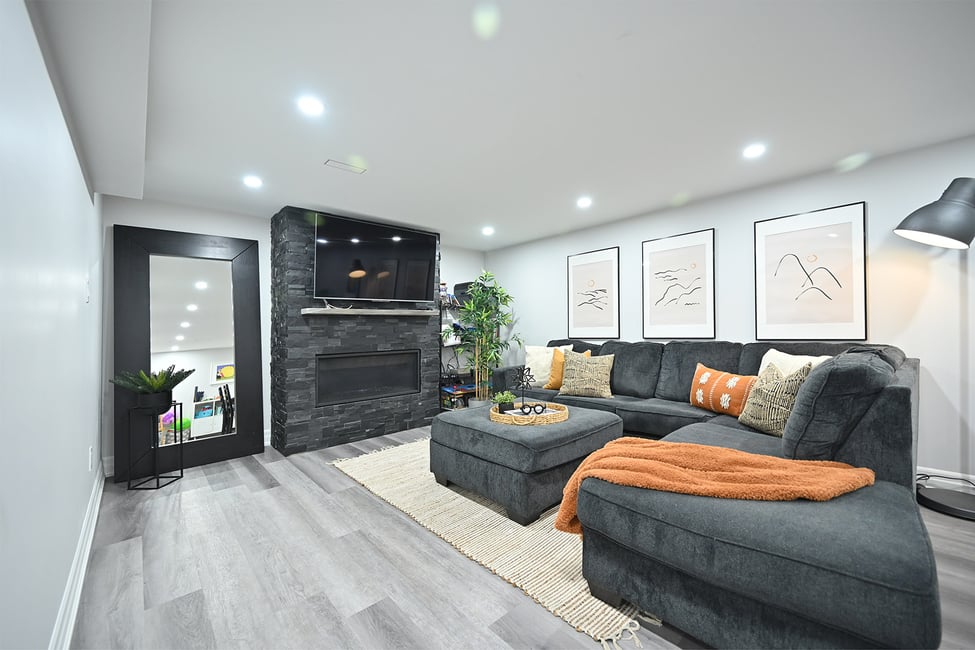
Creative home staging ideas

Selling a home is about more than just square footage and location. In today’s competitive real estate market, presentation is everything. That’s where home staging comes in. Done right, staging can help your home stand out online, attract more buyers to showings, and even spark bidding wars. The best part? You don’t need a full renovation or a huge budget to stage your home effectively. With a little creativity and intention, you can transform your space into something that feels fresh, welcoming, and market-ready.

Here are some creative real estate staging ideas that can make your home feel irresistible to potential buyers:

1. Use Paint to Expand Space and Light

Paint is my client's secret weapon. The right colour reflects light even in a dark room, make rooms feel bigger, and can add the appearance of natural light to any space. 

Paint colours that sell:

Right now, I prefer neutral tones that don't read stark white, but instead are softer.  For greys which are still popular I prefer a warmer grey or pale taupe that can blend with both brown or grey toned furniture.  I enjoy a wall colour that has enough contrast to stand out from the trim to give a higher end look. Eggshell for the walls and semi-gloss for the trim makes both stand out.  Don't be fooled by the word 'white' name in the paint colours - to a paint brand white can look anything from beige to grey in my opinion! 

Behr Spun Wool for walls

Benjamin Moore Dove White walls and trim (it also gives good coverage over darker walls)

Benjamin Moore Simply White for trim

Benjamin Moore Chantilly Lace for trim (although coverage is not as good as Simply White & Dove White)

2. Create Character in a plain room

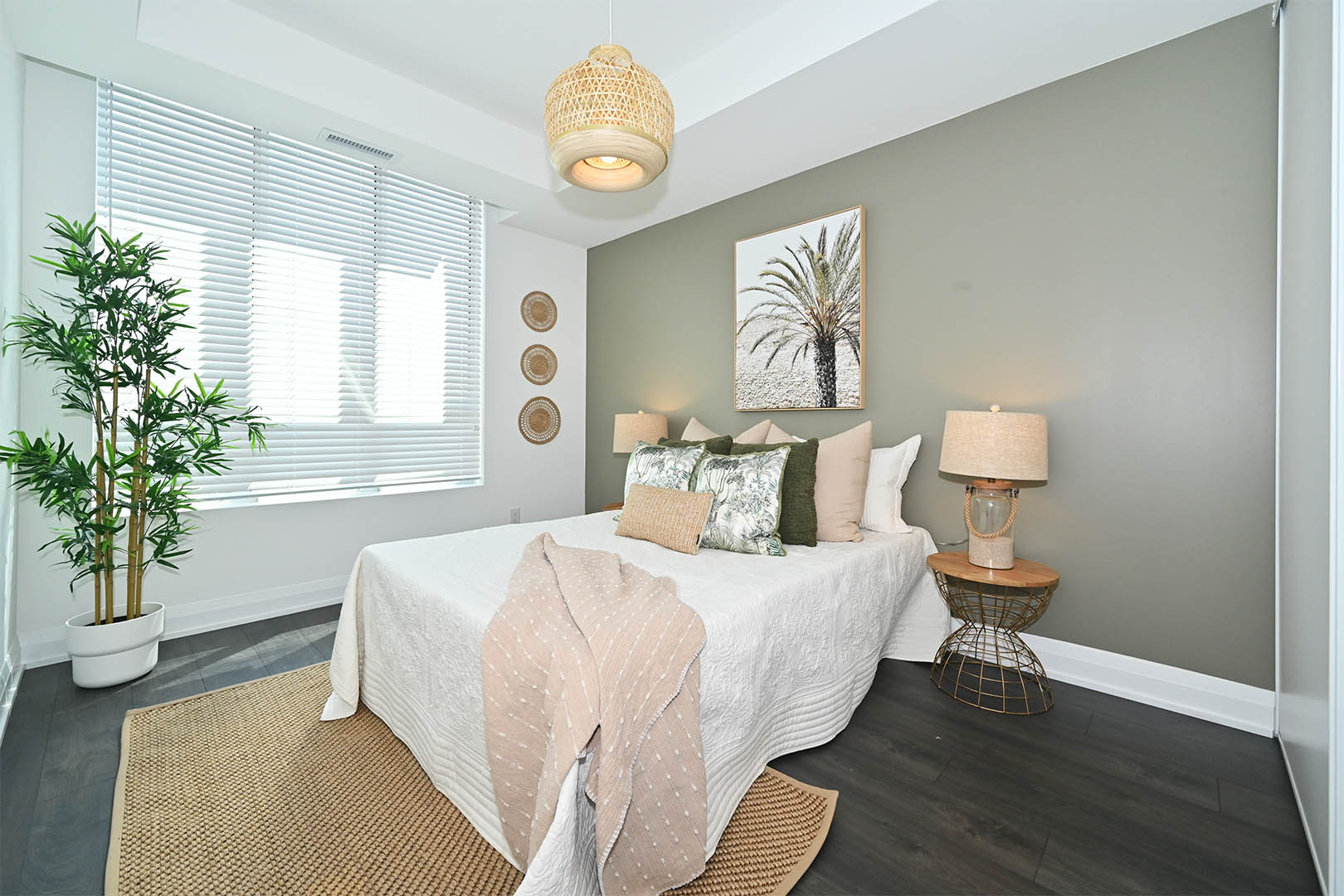
Changing a light fixture and painting a feature wall can turn a box into a showstopper with the right accessories.  Or a feature wall in a powder room can transform a space with peel-and-stick wallpaper, available on-line or in any home renovation store

4. Change Light fixtures & switchplates

Lots of homes I sell still have the builder basic light fixtures - see the picture below where we transformed a plain jane condo to a warm hygge space with a feature wall & Ikea light fixture.  

 A handyman can replace old "tongue' light switched to decor switches in an afternoon.

5.  Add lights where there are none

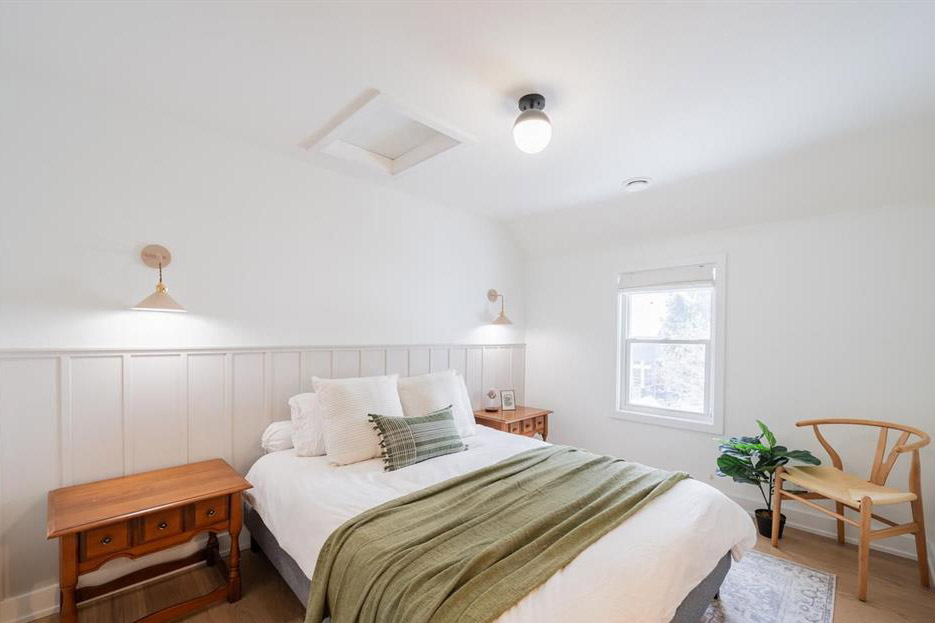
Did you know that you can find plug-in rechargeable lights on Amazon?  These wall mount like a picture and the bulbs remove for re-charging.  A great, inexpensive way to brighten any room.   The pink sconces below were in a home I purchased for a client.  They are rechargeable, with a bulb that is attached to the base by a magnet.  There's a great selection under $100.  Bonus is that if you keep them charged, they work if the power is out! 


6.  Use soft furnishings strategically

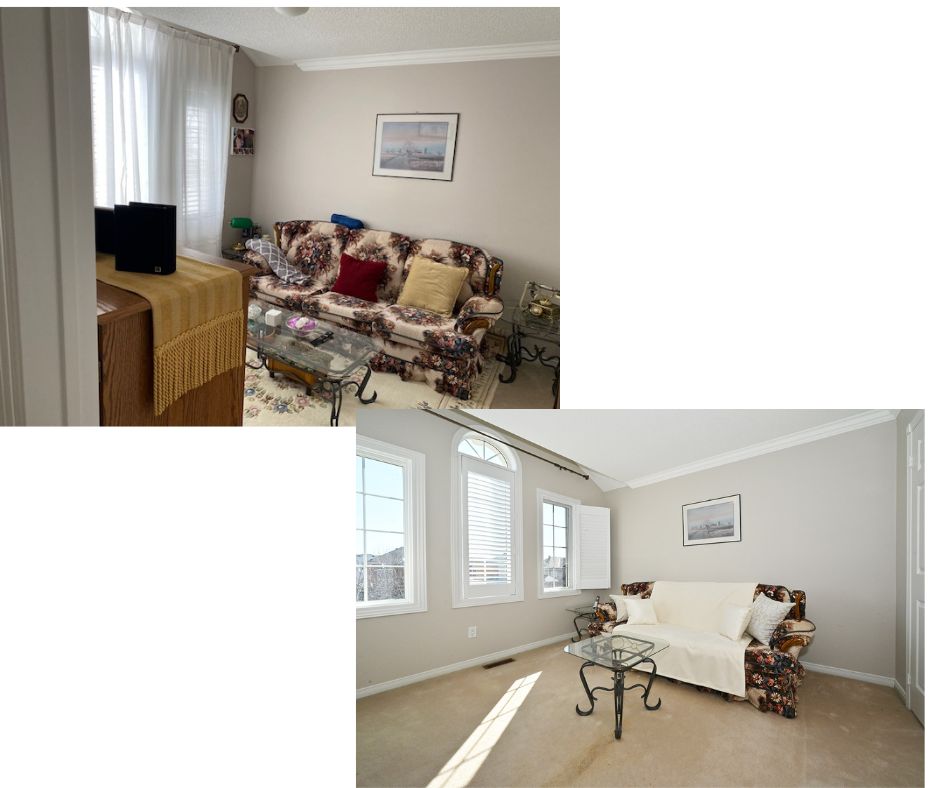
Have an outdated or loud piece of furniture that needs to stay for staging?  Neutralize it with throw pillows & strategically placed cosy throws: 


7. Bring in the light

Even though the room above had light sheers, removing the draperies & opening the blinds immediately created a bright, open space.   Replacing heavy drapes with sheer panels pushed to the side can add a finishing touch, too.

8. Stage the Closets

Don’t just stuff everything behind closed doors—buyers *will* look inside! Clear out clutter and stage closets to look spacious and organized. Use matching hangers, neatly folded linens, and a few well-placed baskets to suggest a lifestyle of ease and order.  Remove any clutter on the closet floors, too.

9.  Make it sparkle

A professional deep clean before you list is essential - buyers translate a clean home with a well kept one.

10.  Consider Scent

Our sense of smell is tied closely to emotion and memory.  Use scent to your advantage with subtle candles or diffusers.  I'm talking high-end, subtle scents that are not overpowering - not glade plug ins.  Avoid anything overpowering—you want clean, fresh, and inviting.  

Final Thoughts

Staging is about helping buyers visualize themselves living in your home. These creative ideas don’t require a huge investment, just a thoughtful approach and a little effort. By emphasizing your home’s strengths and creating inviting, memorable moments, you’ll be one step closer to that sold sign.


Looking for more inspiration or professional help with staging? Reach out today—we’d love to help make your home stand out! 415-562-5002

Enjoy transformation stories?  You can find some modest home glow-ups on my YouTube Channel here:

Before and After Transformations

See what my clients say about working with me here:

Sue Anfang Testimonials

You can find some of my impactful property videos here: 

Property Tours of home sold by Sue Anfang


May 25, 2025

Recent Blog Posts

Nov 10, 2026

Selling a Loved One's Home as an Executor or Power of Attorney: Where Do You Even Begin?

I know when this happened to me it was overwhelming - even as an experienced realtor, knowing where to start and where my responsibilities lay were confusing & on top of that it's a very emotional process!  Family dynamics can complicate the matter - although mine was smooth sailing; often family members don't get along, have differing opinions on a property value, different styles of moving through the process, different needs for inheritance funds - so navigating is exhausting! 

Whether you have been appointed Power of Attorney for an aging parent or are serving as the executor of an estate in Ontario, taking on the sale of a family home can feel overwhelming. Balancing family dynamics, legal requirements, and decades of accumulated belongings is no small task. Here is what you actually need to evaluate to navigate the process smoothly and protect the value of the home.

Author's note: this article is not meant to be legal advice, but written from a real-estate perspective.

1. Confirm your legal authority first

Before signing documents, hiring contractors, or listing the property, double-check that you have the proper legal paperwork in hand. For a Power of Attorney, ensure the document is active and grants real estate authority. A POA is only valid if the person is still living.

For an estate, you will most often need a probated will (or proof of probate application) before the property can officially close. Getting your lawyer involved early saves costly delays down the road. And there's a lesser-known "first dealings" caveat that could save your family thousands—you can call me and I'll walk you through it.

For example, a colleague of mine is working with a seller with this scenario:  The house is her Mother's home; the mother has passed away.  The mother named both herself and her sister as Estate trustees.  But it was worded unclearly.  The sister has also passed away -- without a will.    So does the remaining daugher have autority to sell the home?  That is something only a lawyer and/or the court can decide. 


2. Tackle the contents before the real estate

Moving or settling an estate home usually means dealing with 30 to 50 years of accumulated possessions. Avoid trying to do it all yourself in a single weekend. Start by identifying sentimental items for family members, then bring in professional estate auctioneers, donation services, or clean-out teams for the rest. Clearing the clutter first gives you a clear picture of what repairs or staging might actually be needed.

3. Decide between 'necessary repairs', 'updating', and 'renovating'

It can be tempting to fully update an older home to max out the price, but over-renovating an estate property may not get you a 1:1 return. Here's where a local realtor can advise you on market conditions and where to get the best ROI. Many families simply don't have the money for a major reno, so make sure to get professional advice at the outset.  If family members are collaborating,  there may be a difference of opinion - so that's also a good reason to bring in a local realtor for advice at the beginning. 

4. Vacant Toronto homes face unique risks

Check with the home insurance provider. Many insurers require a vacant home permit or mandate regular walkthroughs (often every 48 to 72 hours) to keep the policy valid. Ensure lawn care in the summer and snow removal in the winter are set up so the property stays safe, looks lived-in, and avoids municipal fines.

But what about the City of Toronto Vacant home tax?  Did you know that as long as the property is in the probate process or being sold you can avoid Toronto's Vacant Home Tax?  You need the property tax information to file your declaration on-line.


5. Price for the current market

Estate and POA sales carry a fiduciary duty to act in the best financial interest of the estate and beneficiaries. Often family may disagree on price. Asking for an objective, data-backed comparative market analysis helps set a fair market price that generates strong buyer interest without leaving money on the table.  

You'll need to do this up front, as there will be probate tax on the estate's total holdings (1.5% at time of writing in Ontario).  Real Estate may be the largest estate holding for the estate, and the estate tax implications may help you decide whether or not to renovate. 

This can be tricky if the family has differing opinions on value.  Or if you're dealing with a real estate agent that's not local.  In that case there are a few options to choose from:

  • pay for a formal appraisal
  • get 3 letters of opinion from different realtors and choose the average

Just understand if the price you get from the house is more than you've stated in your probate application or if the market improves between applying for probate & paying the probate fees you'll need to save money from the estate to pay the additional probate fees. 

6. Can I sell my deceased parent's house if there is no will in Ontario?

This happens more often than you may think. In this case, the closest next of kin must formally apply to the court for a Certificate of Appointment of Estate Trustee Without a Will. No bank, financial institution, or land registry office will let anyone sign documents, access accounts, or transfer real estate title until the court issues this certificate.  This is what happened to my colleage in the first question.

Here are 5 frequently searched questions and answers that address the most common roadblocks families face during executor and POA real estate sales:

FAQ's for selling a property under POA or as an Estate in Ontario

1. Q: Do we have to wait until probate is fully approved before putting a family home on the market?

A: You can list, market, and even accept a conditional offer on an estate property while the probate application is pending. However, the sale cannot legally close until the court issues the Certificate of Appointment. Building this timeline into your closing date avoids wasting valuable time.  Often there's a special clause we realtors insert into the offer to allow for a flexible closing date based on probate. 

There is one exception to this, and that's if the property falls under "First Dealings" - call me at 416-562-5002 and I can explain more about first dealings.  This saved a client $15,000 in probate tax this year! 


2.  Q: What is the difference between a Power of Attorney (POA) and an Executor when selling a home?

A:  A Power of Attorney for property only holds authority while the owner is alive, and that authority ends the absolute moment they pass away. An executor (or estate trustee) only gains authority after death. They never overlap, so verifying which document is active is always step one.


3. Q: Will doing a major modern update on an older family home guarantee a higher selling price?

A: Not necessarily. Over-renovating an estate property often fails to deliver a 1:1 financial return. Most estate homes benefit far more from a thorough clean-out, fresh paint, and targeted repairs that fix safety defects rather than costly, full-scale modernizations.  However in a soft market where prices are falling, updated homes sell faster than fixer-uppers.


4. Q: Are we covered if the family home is sitting empty while we sort through belongings and wait for a sale?

A: Standard home insurance policies typically become void or restrict coverage after 30 days of vacancy. You must notify your insurance provider immediately, as many policies require a vacant home permit or mandate physical walkthroughs every 48 to 72 hours to keep the policy active.   In some cases a family member may move in short term to ensure the security and insurance remains active on the home.  


5. Q: How do we sell a property if our parent or family member died without a will and their spouse is no longer living?

A: Dying without a will is called 'intestate' when there is no will, the closest next of kin must formally apply to the court for a Certificate of Appointment of Estate Trustee Without a Will. No financial institution, bank, or land registry office will permit anyone to sign transfer documents or access equity until the court officially issues this certificate. 


6. Q: When are probate fees due?

A:  Probate fees are due when you apply for the Certificate of Estate Trustee.  The fees come out of the estate funds.  If there are investments or bank accounts, the financial inistitution may release the funds to pay for the fees before the accounts are switched to estate accounts with limited access. 


7. Q: How long does the probate process take in Ontario? 

A:  This varies by jurisdiction, in bigger cities it may take 6 months, in smaller municipalities shorter.  Your lawyer can probably give you a good idea of how long it will take.  Just know that you can't look up the progress on line! 

Related articles:

Benefits of Home Staging a property

Before and After Home Glow-ups for modest homes

Clearing Decades of Stuff without having an nervous breakdown

Before you renovate, watch this first


Get in touch:  416-562-5002 [email protected]

...
Oct 29, 2026

Have you ever heard of a DiSC personality test?  Well this blog post is for all the high D's out there (read below for what this means)


My head was crunching numbers this week, especially given the interest rate hike of .25% yesterday & the election this week - with a promise to lift the land transfer tax.  What would all this mean for real estate in Scarborough?  So I thought I'd start out at the beginning and look at what's happening this year.  My objective is to look at the following data:

  1. How much has the median price changed vs. this time last year
  2. Current inflation rate
  3. How much are sales numbers up or down? (West Hill is a surprise)
  4. How many years does it take for house prices to double in south east Scarborough? 

Inflation rate with fuel: 3.1%  Without: 2%

What does this mean? BOC wants to hold inflation to 2%  Everythings expensive, now mortgage rates got more expensive; about $40-$50 per $500,000 per month

Change in Median Home Sale Prices south east Scarborough vs. Toronto 2026


Toronto1,230,0001,200,000-30,000-2.44
Centennial Scarborough1,100,0021,077,500-22,502-2.05
West Rouge1,100,0021,020,000-80,002-7.27
West Hill900,000830,000-70,000-7.78


What does this mean: house prices have dropped since 2025 same time frame.  Centennial follows the rest of Toronto, West Hill has the biggest swing.  But surprisingly West Hill has had an increase in sales - I guess the large price drop creates great value for buyers. 

Change in number of home sales south east Scarborough vs. Toronto 2026


Freehold HomesNumber of Sales 2025 2026 YTD 
Toronto9,4719,279
Centennial Scarborough9580
West Rouge8042
West Hill94107


What does this mean:  reflective of what I'm feeling right now - a slowdown in sales.  West Hill sale prices have dropped to be very attractive to buyers especially in that below $830,000 price range.  


How long does it take home prices to double in south east Scarborough?

This is a stat that came up in a meeting the other day - that house prices in Toronto double every 10 years - I think they mean freehold.  In southeast Scarborough here's when house prices have doubled: 

Centennial, Scarborough - doubled since 2012 (14 years)

West Rouge, Scarborough - doubled since 2015 (11 years) 

West Hill, Scarborough - doubled since 2016 (13 years) 

What is a DiSC personality test? 

A DiSC assessment is a behavioral assessment tool used to improve communication, leadership, and team performance by identifying four primary personality styles: Dominance, Influence, Steadiness, and Conscientiousness. Organizations worldwide use DiSC to develop stronger leaders, improve workplace communication, and build more effective teams.  A high "D" personality wants quick, fact-based answers (think CEO)

Interested in other real estate statistics for Scarborough?  Check out my other blog posts! 


...
1
2
3
...
56
